The Unitarity Triangle, 2006–2023
Vincenzo Vagnoni’s 2024 LHCb Starterkit talk walked through two decades of CKM fits. Play the years: the bands shrink, they still meet, and LHCb Upgrade II is the next millimetre.
 ☕️
☕️I’m a postdoctoral researcher at Data Science for Digital Society (DS4DS), La Salle Campus Barcelona, working on AI for high-energy physics. I build lightweight graph neural networks for real-time particle reconstruction at the LHCb experiment and LLM/RAG systems that help physicists revive and accelerate their analyses. Before this, I spent 2.5 years at CERN operating and programming the CMS hadronic calorimeter, and earned my PhD at the University of Alabama searching for new physics in high-mass diphoton events. I care deeply about science communication: I’ve built museum exhibits, interactive physics visualizations, and open-source tools for healthcare and education.
PhD Physics (High Energy Physics)
University of Alabama
BSc Physics
Ateneo de Manila University
I work on making machine learning fast enough for physics that cannot wait. At the LHCb experiment, collisions happen 40 million times per second, so I design lightweight graph neural networks and knowledge-distilled models that reconstruct particles in real time within the trigger’s strict latency budget, targeting the next-generation PicoCal calorimeter for LHCb Upgrade II.
In parallel, I build LLM, RAG, and agentic systems for scientific analysis: retrieval over analysis code, notes, and documentation that lets physicists revive legacy measurements and accelerate new ones. I presented three talks on this research programme at CHEP 2026 in Bangkok.
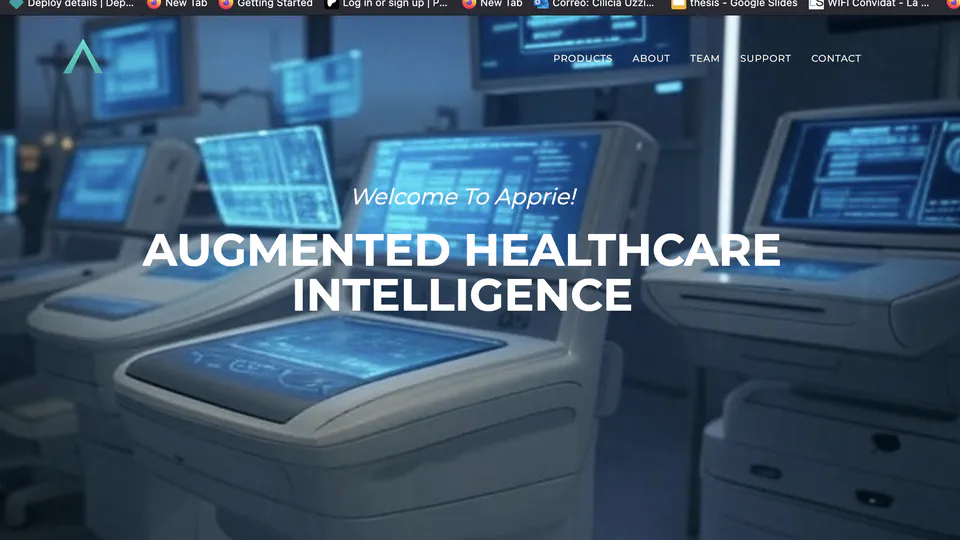
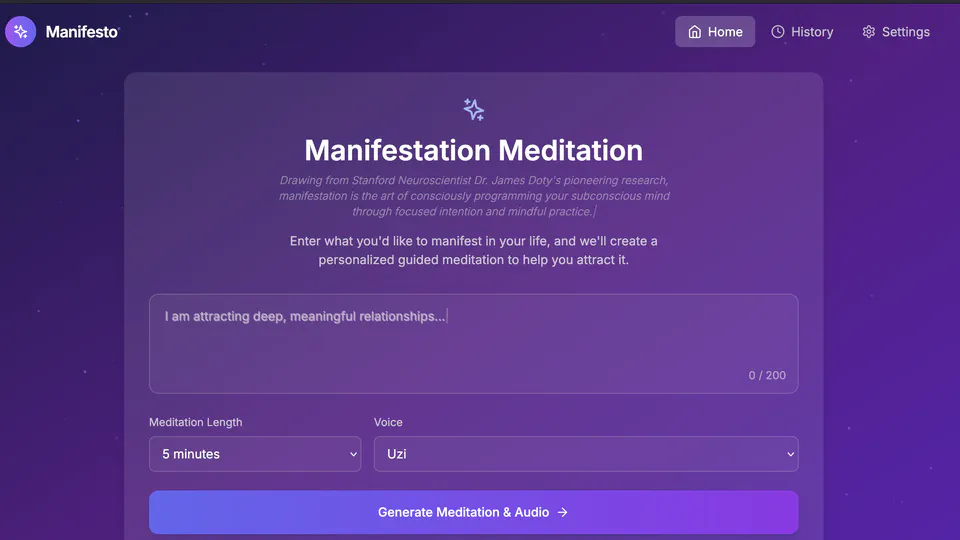
Beyond the lab, I care about science communication and open-source tools for health and education, from museum exhibits to interactive physics visualizations you can explore on this site.
Twelve months of my postdoc, drawn as an event display: each track is a skill area, each hit a milestone, each measurement a real outcome.
All three tracks were presented as talks at CHEP 2026 (Computing in High Energy and Nuclear Physics), Bangkok, May 2026.
Full record on INSPIRE-HEP, ORCID, and GitHub.
Vincenzo Vagnoni’s 2024 LHCb Starterkit talk walked through two decades of CKM fits. Play the years: the bands shrink, they still meet, and LHCb Upgrade II is the next millimetre.
Presented lightweight GNNs for LHCb’s PicoCal, PyTorch-to-ONNX inference optimization, and RAG-enhanced agentic revival of a legacy Λb → Λγ analysis at the 28th Conference on Computing in High Energy and Nuclear Physics.